

On this page
- Choose for the shape of your lawn
- Greenworks 25322: a balanced compact choice
- WORX WG779: choose the smaller cut deliberately
- EGO LM2114: keep a full-size option on the list
- LawnMaster MEB1114K: a nearby-outlet alternative
- Measure access and storage before choosing a deck
- Size the job by grass, turns and interruptions
- Choose simplicity only when the effort suits you
- Common questions
- Models to investigate
Choose for the shape of your lawn
Grass area is only part of the decision. A narrow gate, raised storage step or collection of short strips can matter more than an acreage label. These recommendations use verified kit and manual information; the comparisons below are editorial judgments, not a common timed mowing test.
| Model | Useful small-yard role | Deck / verified cut | Included power equipment | Main compromise | Shop |
|---|---|---|---|---|---|
| Greenworks 25322 | Compact cordless starting point | 16-in deck / 16-in cut | One 40V 4Ah battery; charger | Narrower coverage; listed 120-min recharge | Buy on Amazon |
| WORX WG779 | Smaller cutting path; lifting-sensitive buyer | 14-in deck / 13-in cut | Two 20V 4Ah packs; dual-port charger | Both packs run together; additional passes | Buy on Amazon |
| EGO LM2114 | Small but open level lawn | 21-in deck; swath unverified | One 56V 6Ah; 320W charger | Full-size push mower needs turning room | Buy on Amazon |
| LawnMaster MEB1114K | Compact patch with suitable cord route | 15-in deck / 14-in cut | 120V / 11A corded; no battery | 3-in maximum height; confirm the offered kit | Buy on Amazon |
Greenworks 25322: a balanced compact choice
The 25322's 16-inch cut makes it our starting point for a small lawn with beds, trees and short runs. It leaves less work to a narrow cutting path than the WORX while keeping the deck compact. Bagging and mulching cover common clipping preferences without adding drive controls to a simple push mower.
Its limitations matter when the grass gets demanding. Greenworks lists up to 40 minutes with the included 4Ah pack and a 120-minute recharge; neither proves it will finish your particular lawn on one charge. Avoid the manufacturer's conflicting quarter-/third-acre labels as a sizing guarantee. The 25322 review also explains why the 40V 8Ah pack's lid-fit restriction prevents a casual battery upgrade.
WORX WG779: choose the smaller cut deliberately
The WG779 has a 14-inch deck but a 13-inch cutting diameter in its manual. That distinction helps explain its role: working through short, broken-up sections where a larger mower may be cumbersome. On broad grass, the narrow path means more passes. We have not measured the time difference, so a width comparison should not become a mowing-speed claim.
The manual lists 26.2 pounds for the bare machine; fitted batteries add weight. The supplied two 4Ah Power Share packs operate together, so the second pack is not a spare mowing session. Its 1.5–3.5-inch height range also differs from the Greenworks. Read the WG779 kit and ownership assessment if lifting, height or existing Power Share tools are central to your choice.
EGO LM2114: keep a full-size option on the list
A small lawn can still be mostly one open rectangle. In that situation, the LM2114's full-size 21-inch deck may be more useful than a tiny mower that needs additional trips. It is a push model, with one-lever height adjustment and bagging, mulching and discharge functions. Choose it when access is generous and pushing is comfortable.
The exact LM2114 kit includes a 6Ah battery and 320W charger. LM2112 has a different battery; LM2110 is bare. Its manual gives a 45.2-pound battery-free weight, so consider any step into the shed before buying. The LM2114 review helps decide whether that handling commitment is worthwhile or whether a smaller mower better suits your weekly routine.
LawnMaster MEB1114K: a nearby-outlet alternative
For a compact patch that can be reached using its approved electrical setup, the MEB1114K avoids a mower-battery purchase. Its current manual confirms a 14-inch cut, a 7-gallon catcher and five heights from 1.4 to 3 inches. Those limits suit some lawns and exclude others: do not choose it if your intended mowing height needs to exceed 3 inches.
The manufacturer page conflicts on mulching equipment, so buy for the verified collection function and confirm the received kit. Check the seller’s current stock, attachments and return terms before ordering. The LawnMaster review covers those checks; the corded guide explains when cable handling is worthwhile.
Measure access and storage before choosing a deck
Measure your narrowest usable gate opening, allowing for hinges, posts and the angle of approach. Then obtain the actual assembled mower width, including wheels or protruding controls. Deck size is not assembled width, and none of these marketing deck labels guarantees gate clearance.
Measure the storage spot in the orientation the manual permits. Include the handle, collection bag and enough room to remove batteries or move the machine. A carton dimension is not a folded-storage dimension. If the mower must cross a step, consider how it will be lifted and where the bag and batteries can safely be removed first.
- Gate and path: check both width and the space to turn immediately beyond the opening.
- Storage: check folded length, width and height on the actual model; do not assume all folding mowers store vertically.
- Lifting: compare weight on the same basis, with the accessories you intend to move.
- Outlet route: include detours around the house and beds if considering a corded mower.
Size the job by grass, turns and interruptions
Subtract the house, patio, beds and other unmown space from property area. A compact lawn with numerous obstacles can take more maneuvering than a larger clear rectangle. The grass-area measuring guide helps turn those observations into a more useful brief for choosing a mower.
Allow runtime headroom for thicker grass, collection and your preferred height. A manufacturer maximum is not a guarantee of completion. Also compare recovery: one working battery set plus a slow charger may interrupt a job differently from a spare compatible set. Do not confuse the WORX's required pair with two separate sets.
Choose simplicity only when the effort suits you
These four compact/open-lawn options are push mowers. That can be perfectly sensible on level grass with short runs, but small acreage does not erase a pushing difficulty. A heavier self-propelled mower may reduce straight-line pushing while adding work during turns, transport and storage.
If effort is the reason for replacing your mower, compare handle controls as carefully as deck size in the self-propelled guide. If the decision is mainly access and turning room, choose the smallest machine that still makes the open sections and clipping routine manageable.
Common questions
Is a 21-inch mower too big for a small yard?
Not automatically. EGO LM2114 can make sense on a small, open, level lawn with generous access. Short strips, narrow gates, difficult lifting and frequent turns are stronger reasons to choose a compact mower than acreage alone.
Is the WORX lighter than Greenworks 25322?
The WG779 manual gives a 26.2-pound bare-machine weight. Greenworks lists 37.8 pounds without a clear battery basis. Those figures are useful individually, but they do not establish an exact loaded-weight difference. Check the configuration you will lift.
Will a 16-inch mower fit a 17-inch gate?
A 16-inch deck or cutting path does not confirm the overall width. Wheels, housings and the approach angle can require more room. Obtain the actual assembled width and allow practical clearance before ordering.
Do I need a spare battery for a small lawn?
Not necessarily. Match the expected mowing load and your tolerance for a recharge interruption first. Confirm compatibility and whether the mower uses one pack or a pair; do not buy a second pack on the assumption that it always creates another full mowing session.
Models to investigate
These are the exact models discussed here. Read the full assessment and check the offered kit.
As an Amazon Associate I earn from qualifying purchases. How our Amazon model-search links work.
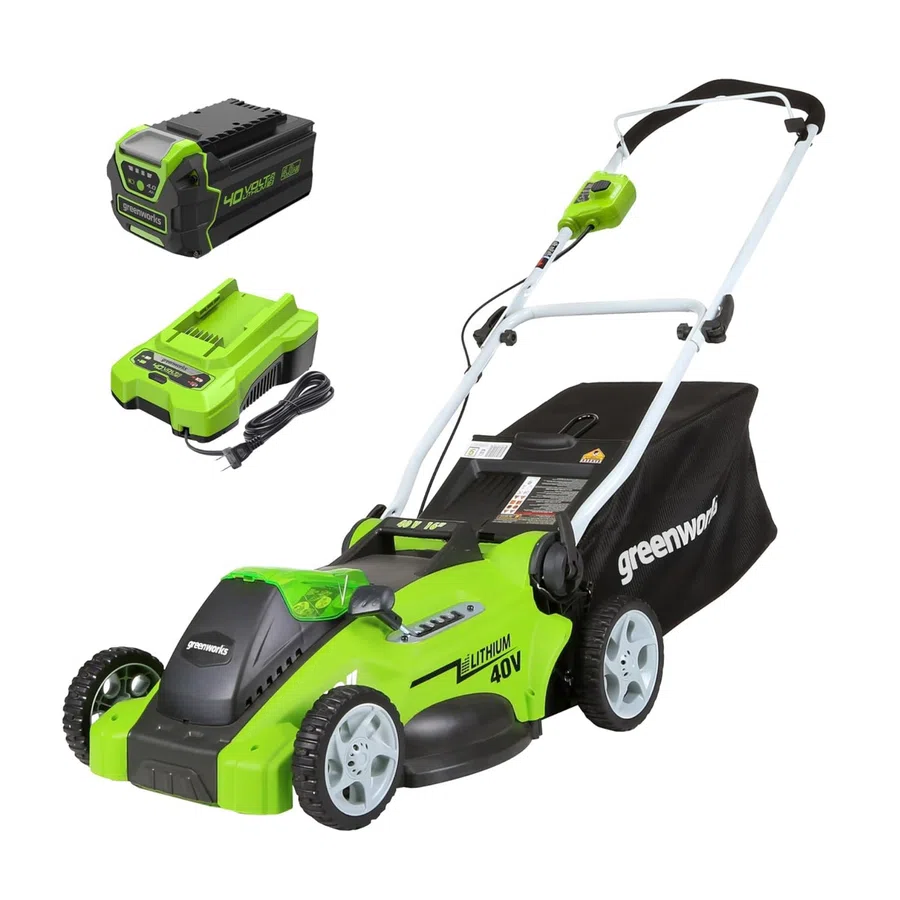
Compact cordless choice for smaller lawns
Greenworks 25322
A compact deck makes sense when access and turns matter more than covering open grass quickly. The 25322 is a focused small-lawn alternative to the full-size push mowers here, with bagging and mulching rather than a long feature list. Expect additional passes on larger lawns and allow for its slower supplied charger.
Buying check: Confirm SKU/model 25322; page also uses LM1604 branding.
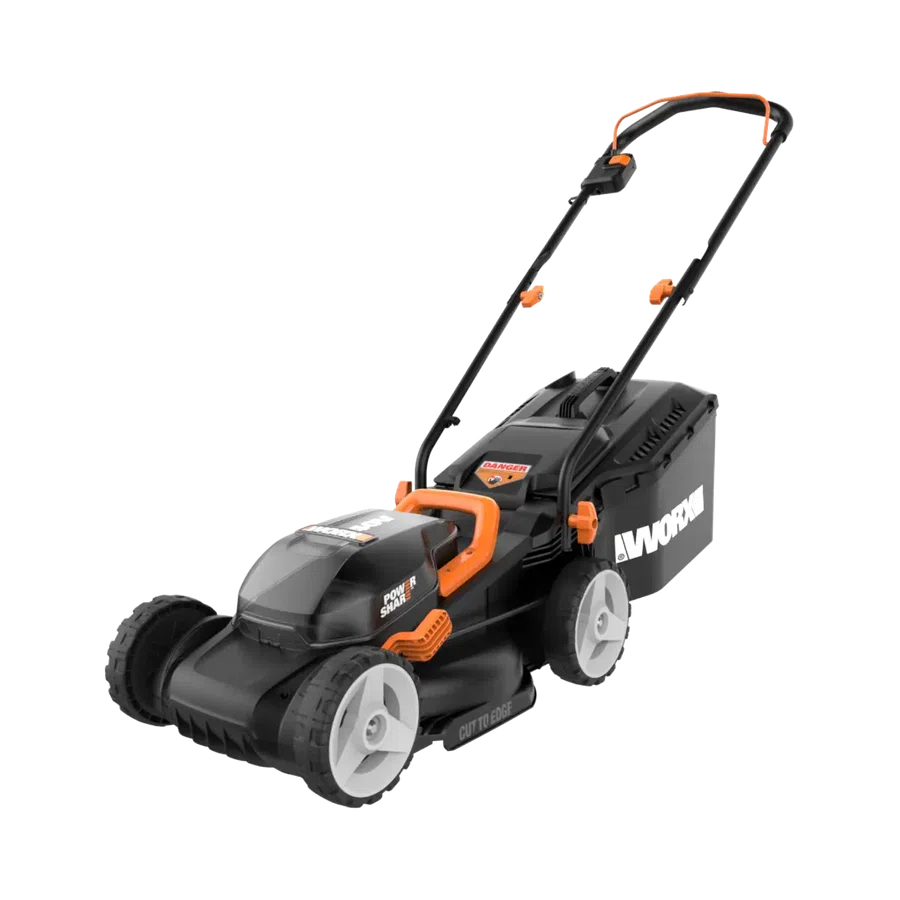
Very small lawn and restricted storage
WORX WG779
The real attraction is its narrow 13-inch cut and compact form, not the 14-inch deck label alone. That can make a tiny, interrupted lawn easier to work around, but it means more trips across open grass. Choose a wider push mower if mowing time matters more than footprint, and confirm retailer stock before settling on this older model.
Buying check: Both matching fully charged Power Share packs are required.
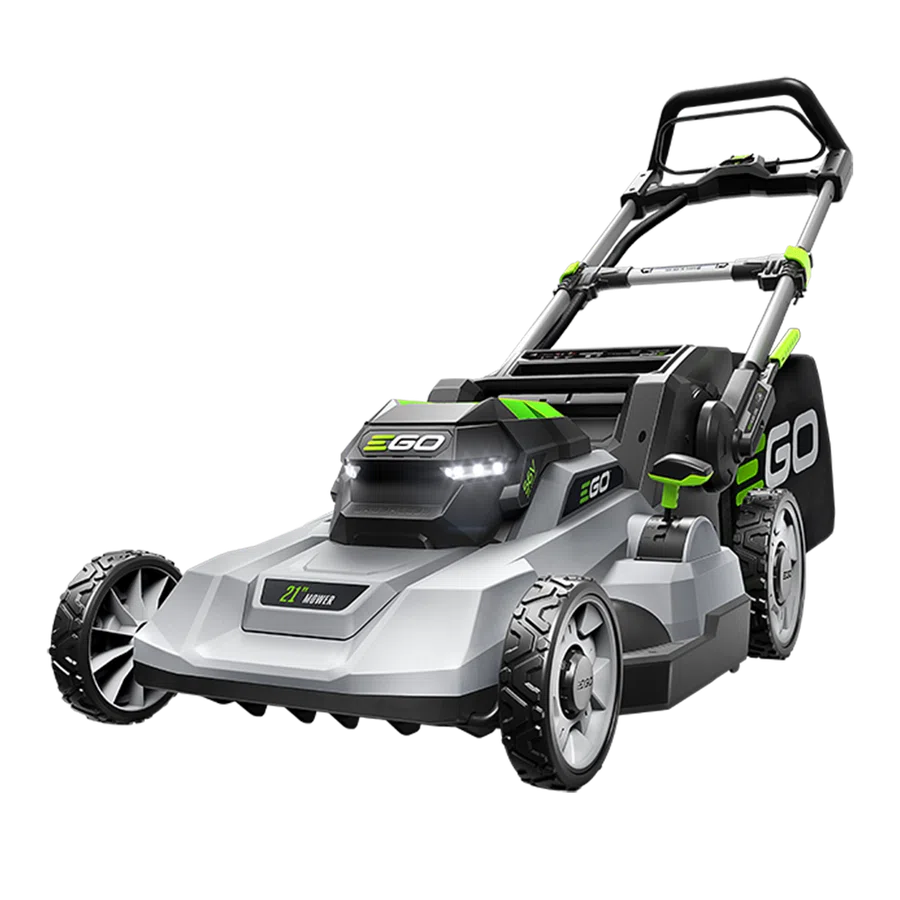
Simpler full-size cordless push mower
EGO LM2114
This is the uncomplicated EGO choice for a reasonably level lawn when you are comfortable pushing. It keeps a full-size deck, one-lever height adjustment and three clipping modes without adding a drive system. Choose the LM2156SP instead if pushing effort or interchangeable cutting blades would materially improve your weekly routine.
Buying check: LM2114 has 6Ah; LM2112 has 4Ah; LM2110 is bare.
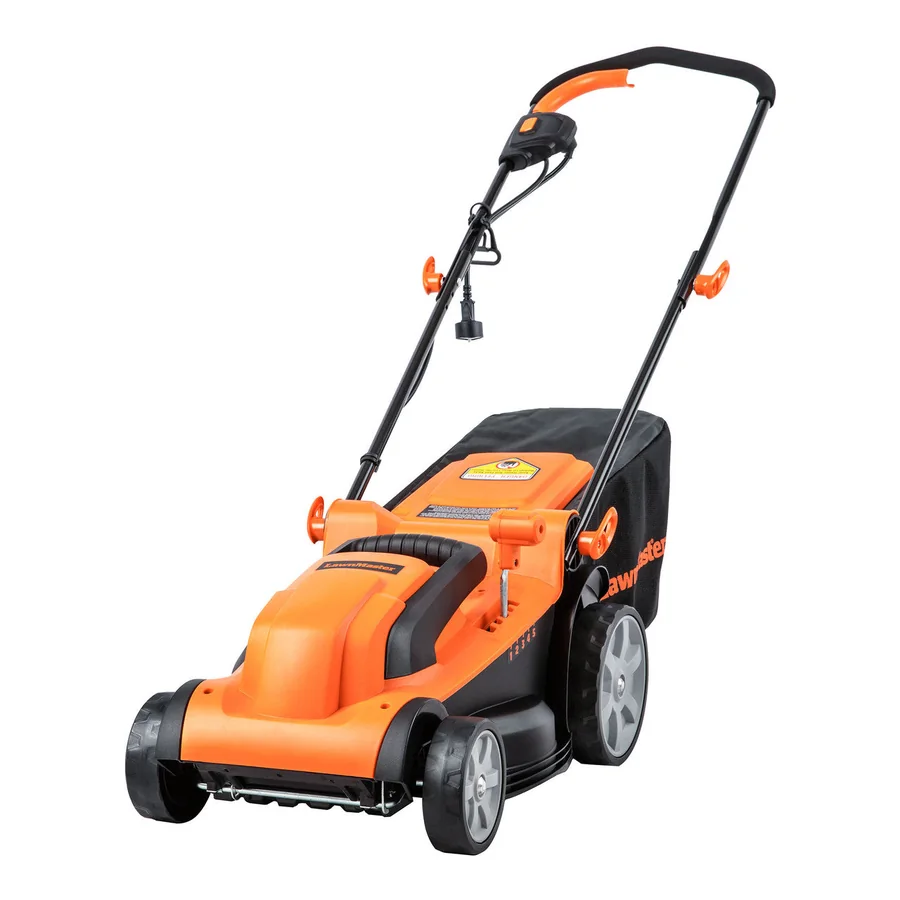
Compact corded mower for a small, accessible lawn
LawnMaster MEB1114K
The narrow 14-inch cut and low published weight make this a sensible mower to investigate for a small lawn with tight routes and a nearby suitable outlet. It avoids battery replacement and charging, but a larger 20-inch mower completes wider open areas in fewer passes. Its 7-gallon catcher and 3-inch maximum height are more restrictive than the larger alternatives.
Buying check: Match MEB1114K; the “15-inch” product title describes its deck, not the actual 14-inch cut in the linked manual.
Documentation and attribution: sources for this article. How we evaluate mowers.

Written by Steven Burt
Lawn care enthusiast in Nixa, Missouri, and owner of Lawn Current. Meet Steven · Suggest a correction